
Winter Beauty and Interest Fall 2019
by Barbara Leonard
Gardeners do know better, but there are too many people who believe the winter landscape is gray, uninteresting, and dead. Let’s take them on a walk around a well-planned garden and show them just how lovely and interesting the off season can be!
Winter interest and beauty are abundant at Green Spring, which isn’t an accident. Our gardeners—going back to the Michael Straight family (1942–1970)—have believed gardens, especially public ones, should be beautiful and appealing year round. The intrepid and loyal visitors who come to the park every day of the year to walk, to play, to socialize, to be refreshed, are very fortunate to find lovely winter vistas. Such gardens are the result of thoughtful and deliberate planning over the years.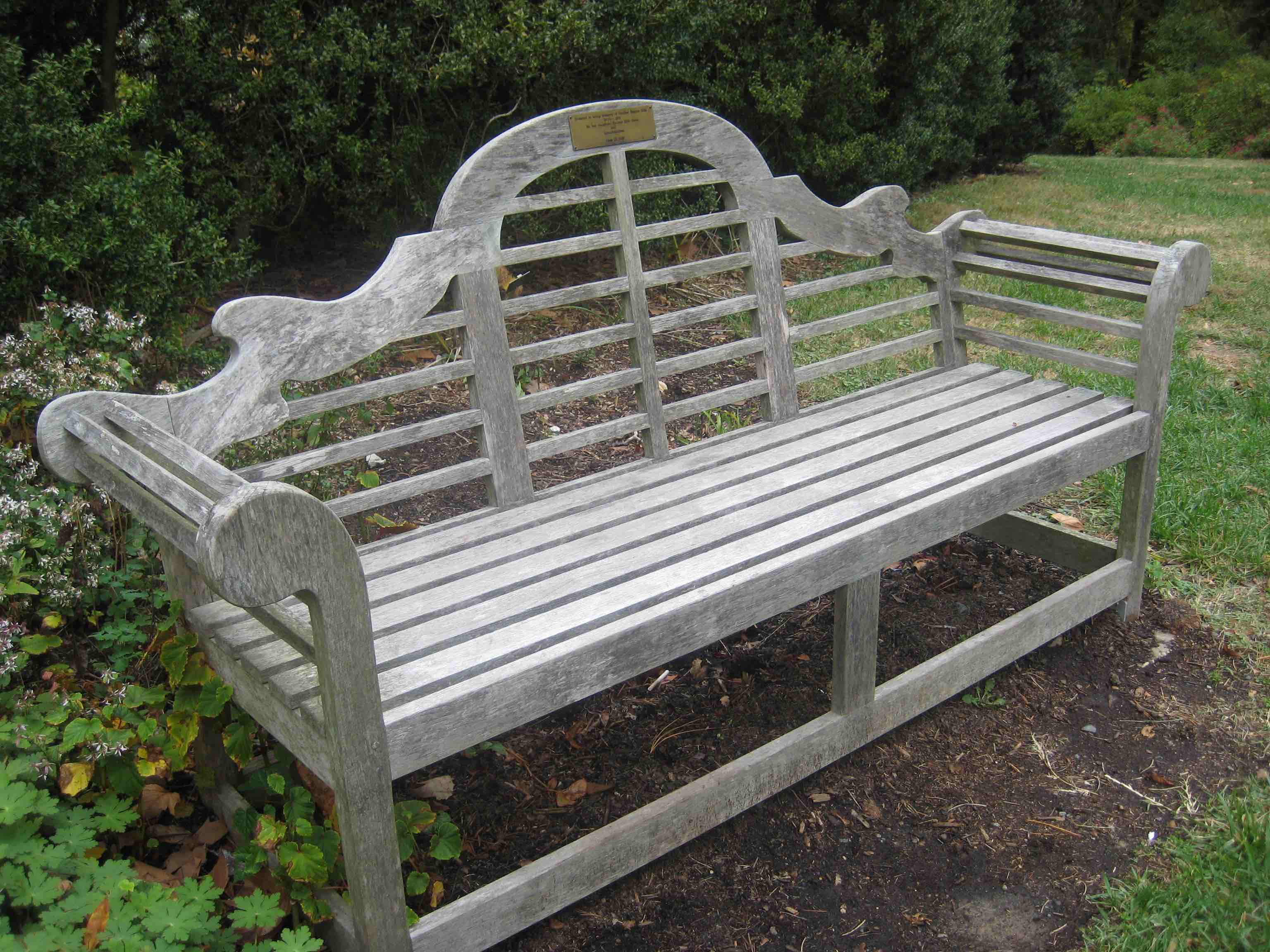 Wooden bench
To appreciate our gardens in the off months, one must consider that it’s the quiet season—no riot of color, striking blooms, or lush foliage. With the softer palette, our senses sharpen and focus on different pleasures: shapes, the structure of trees, the abundance of hardscape and wildlife we failed to see in the high seasons. We become more aware of shadows cast by a weak winter sun. We’re more attuned to the sounds of birds, rustling leaves, the trickle of water. The rich variety of conifers and evergreens show vividly against the soft gray/white landscape. Winter months show the bones, the structure of the garden, offering a kind of crash course to those of us learning about landscaping. Once the fall blaze of color fades, our sharpened senses see the quieter, more elusive interest of the elegant winter garden. Here is what’s to see:
Hardscaping at Green Spring is remarkable and very noticeable in the winter months. The wide, level path leading visitors around the upper beds is attractive and welcoming. The combination of the paving in the concentric garden and the mirroring benches presents an art form winter visitors are more likely to notice without the distractions of blooming and leafing. Speaking of benches, there are many of these hidden around the gardens, made of wood, stone, and metal; they’re tucked away in surprising places all around the gardens and convey a welcoming whisper of “have a seat and stay a bit.”
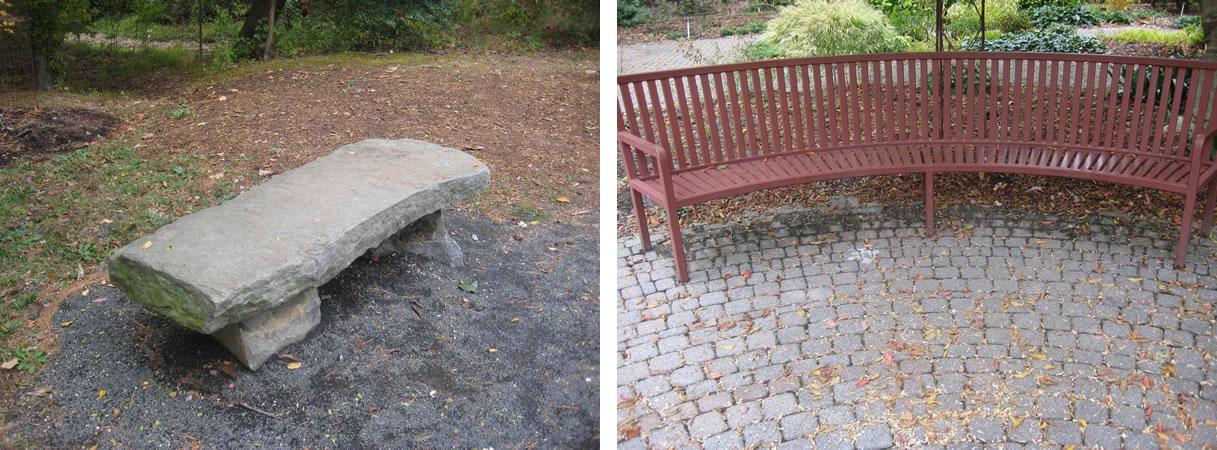 Stone bench (left) and Concentric bench (right)
There are many structures in the gardens: the low-lying Horticulture Center, beautifully planted with a variety of shrubs and trees, the Historic House with its surrounding old trees. The garden shed, painted in lovely soft colors, is a reminder that not everything needs to be gray. The gazebo is a shining white beacon in all seasons, especially so in winter with the dark green row of native eastern red cedars as a backdrop. The gleaming memorial sculpture, Mantle, is remarkable because no matter the weather, no matter the time of day, a golden glow shines from within. Large white boulders in the Fruit garden and other beds may not show much in the summer but are gorgeous in a winter setting. The neat rows of covered beds in the Edible garden are planted with cabbages and kohlrabi, proof of the goodness of winter.
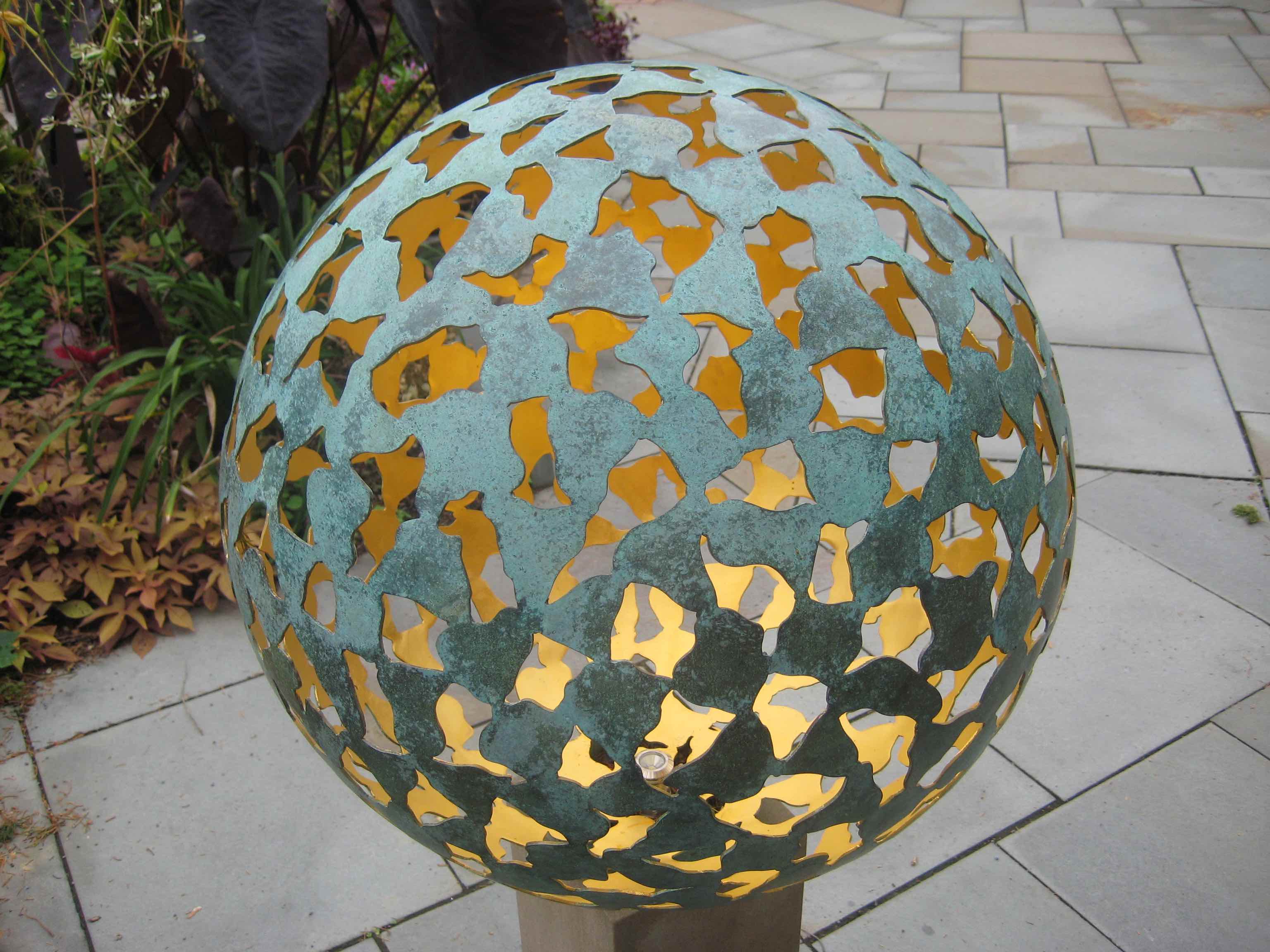 'The Mantle' – Memorial sculpture
The trees are varied and exceptional, as we see in the summer, but more clearly in the bare months. Shape and bark are what we notice in the winter. The majestic London plane tree standing in the shrub garden is a beacon, even more so without her leaves. The mottled bark takes on a silvery white color and astonishes in its beauty on a cold January day. Peeling, cinnamon-colored bark of the Natchez crepe myrtles is next to the Horticulture Center’s front doors. Notice the shape of the Henry maple in the concentric garden, a constant temptation to those who like to climb! From afar, see the magnificence of the size and spread of the branches of the American beech. Spots of bright yellow and orange appear all around the gardens as our renowned collection of witch hazels (over 100) bloom through the month of February, We have deciduous hollies and other berried shrubs that become heavy and bright with their berries in late fall and early winter. Find the Scarlet O’Hara and Rhett Butler hollies as you approach the Historic House from the Horticulture Center. Evergreens with the variety of colors and shapes and textures are a garden’s best friends, and there are an abundance of these at Green Spring as well.
Now that you know what to look for, drop by the gardens on a winter day and see for yourself!
(All photos credit: Ivy Sinaiko)
