

Climate Change at Green Spring Gardens
by Sunny Green. FROGS Board Member
The consequences of climate change have become increasingly obvious to both home and professional gardeners. How better to understand these effects than to ask some of our talented, knowledgeable Green Spring gardening staff. I recently interviewed staff gardeners Adam Bucher, Parker Jennings, Brenda Skarphol, Alda Krinsman, Sarah Strickler, and Jennifer Dasmalchi to share their thoughts.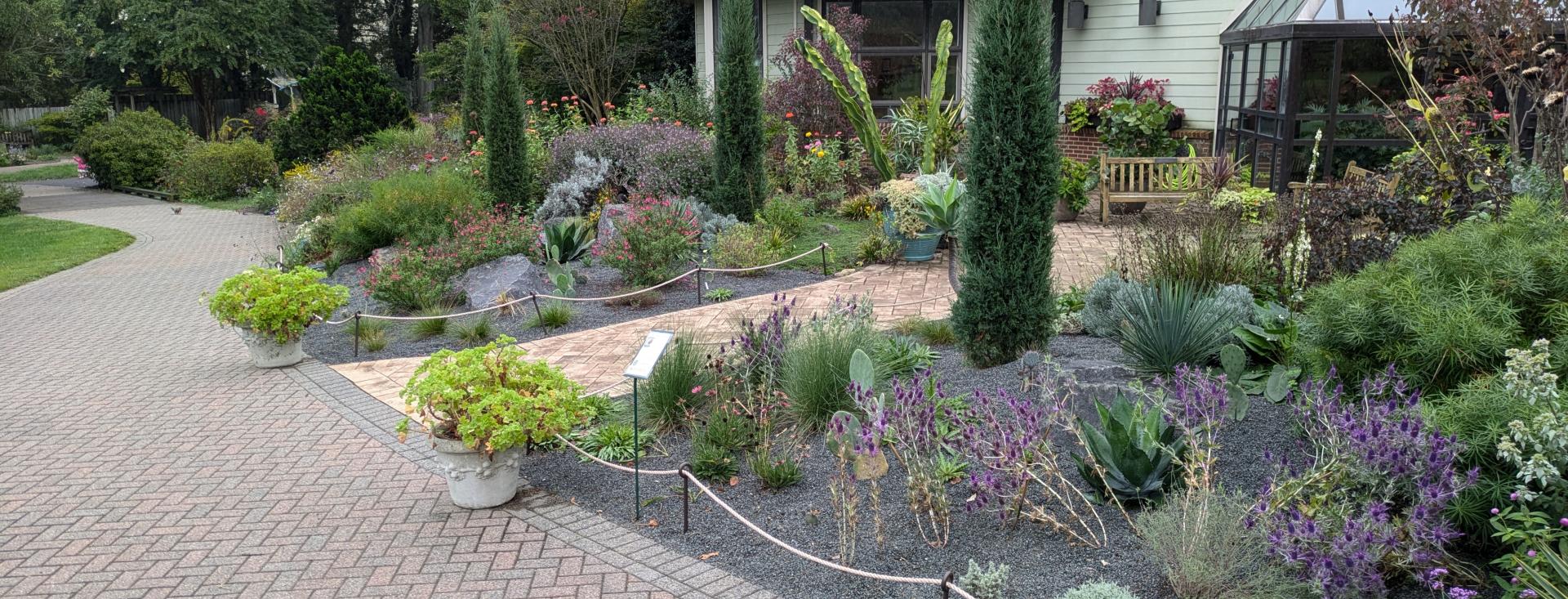 Gravel Garden. Photo by Sarah Strickler
All of the gardeners agreed that climate change was creating numerous challenges for Green Spring’s gardens. Horticulture resource manager Adam Bucher stressed that recent summers showed a continuing change in both heat and precipitation patterns. Our area is experiencing prolonged heat waves along with the absence of refreshing afternoon thunderstorms. This means additional watering needs for plant survival, especially for those newly installed. Because of the concern for water, gardeners may need to move some plants to receive more shade.
Due to the increased summer heat patterns, the USDA map recently redesignated our geographical area from a 7A planting zone to a zone 7B. In the interest of plant variety and design, some gardeners at Green Spring “pushed the zone” even further and experimented with plants that had previously performed well in USDA zone 8A. Brenda Skarphol noted successful planting of zone 8 plants in 2024 in the Long Border and said some plants actually bloomed earlier than in past years. At the same time, numerous formerly dependable plants such as rhododendrons have become more challenging due to increased summer heat. Parker Jennings voiced concern that some of the plants from zone 8, such as recently planted palms, may have been damaged by this winter’s prolonged cold, wet weather.
Brenda cautioned gardeners to be patient in dealing with climate change, stating “you will lose some plants.” Jennifer Dasmalchi noted that temperature changes can push plants “off cycle,” and that over time plants will actually “migrate” in the same way as do insects and other organisms.
Alda Krinsman, who manages the Garden Gate Plant Shop, sees numerous changes in the specimens she propagates for sale and plants in the gardens. Some perennials have increased in size and become “rambunctious,” while others no longer thrive in our climate. Alda encouraged home gardeners to consider natives which “both look good but provide ecosystem services.” She said that when she selects plants to grow and sell, she not only looks at the USDA zone but “also where in the zone the plant grows. Zone designations may be misleading. For example, we may be in the same USDA zone as some areas in the mountains of New Mexico, but their nights are cooler and less humid in summer, so a plant that thrives there may be miserable in our area with hot and humid nights.” Alda also noted color changes due to climate changes. In short, the color of a plant you see in a catalog may no longer prove true when planted in your own garden! Alda referenced this informative blog on the subject from NorthCreek, a respected wholesale nursery.
| Meet the gardeners | ||
 Adam Bucher Adam Bucher |
 Jennifer Dasmalchi Jennifer Dasmalchi |
 Parker Jennings Parker Jennings |
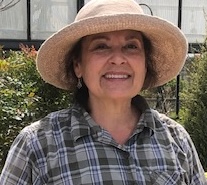 Alda Krinsman Alda Krinsman |
 Brenda Skarphol Brenda Skarphol |
 Sarah Strickler Sarah Strickler |
In response to climate change issues, our Green Spring gardeners have been diligent as they restore and redesign some GS garden areas. For instance, there is now a delightful crevice garden on the walk across from the entrance to the Plant Shop. Moreover, Sarah Strickler has spearheaded the formation of a new “gravel garden” in the full sun Water-wise Garden area. Instead of soil or mulch the area is planted with four-inch deep PermaTill, a gravel-like product that’s both lighter and more porous than gravel and also able to hold nutrients. The area is planted with succulents and other heat-loving natives in hopes they’ll do well in our “winter wet” conditions as well as during increased summer heat. Sarah has written an excellent article, complete with pictures of the installation of the new garden for the Rock Garden Quarterly, entitled “Gravel Gazing: Green Spring Gardens’ New Xeric Garden.”
Regarding specific suggestions for home gardeners, everyone emphasized the “tough, drought tolerant” plants, such as members of the aster family, euphorbia, etc.—what Adam referred to as “the prairie perennials.”
Please visit soon to appreciate and enjoy the creative, biodiverse, and forward-thinking gardens our amazing staff have created.
