

Manager's Message
by Judy Zatsick, Site Manager, Green Spring Gardens
 Judy Zatsick
Happy Spring and welcome to a New Year in the gardens!
Thanks to our relatively mild climate, there is almost always something blooming at Green Spring, even during the coldest months of January and February.
I’d like to share some of my favorite shrubs that bloom in late winter or early spring and help lighten our spirits until daffodils and tulips spread color across our gardens.
I am partial to shrubs with fragrance, so I’ve included several.
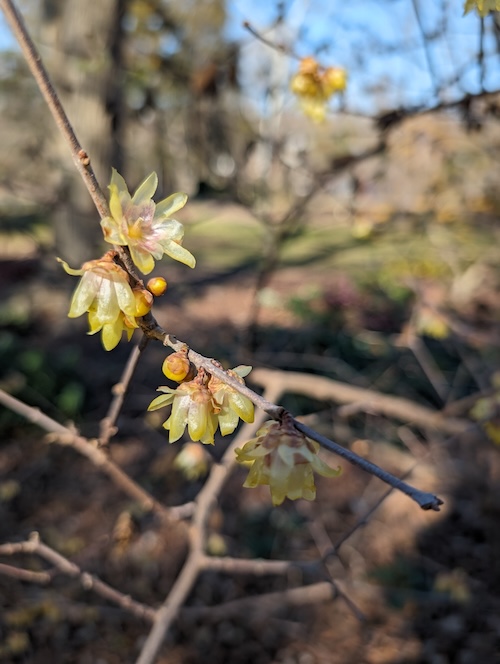 chimonanthus praecoxNothing beats wintersweet, Chimonanthus praecox, for aromatherapy. Waxy, cream-colored bells can bloom as early as December, but more often in January. Their powerful sweet and spicy fragrance will call you from across the garden on a warmish winter day. The bells hang like little lanterns from leafless stems, slightly transparent when the light shines through them. The shrub is not very graceful in habit, but it prunes easily and can be kept compact. Part shade is fine.
Edgeworthia chrysantha, ‘Goldfinch,’ is a four-season interest shrub and one that visitors frequently ask about. I planted it over 10 years ago, so it holds a special place in my heart. This cultivar of the ‘paper bush plant’ as it is called, is a dwarf and a great garden plant as it remains fairly compact. Visitors comment on its fuzzy, cream-colored buds suspended from stout branches that have a candelabra type habit. The buds unfurl to reveal clusters of highly fragrant yellow flowers that you will smell before you see them. It should begin blooming in the next few weeks, a real harbinger of spring. During the summer, tropical looking foliage in a pretty shade of emerald green covers the plant. Unlike the species, it retains a great form and does not need pruning.
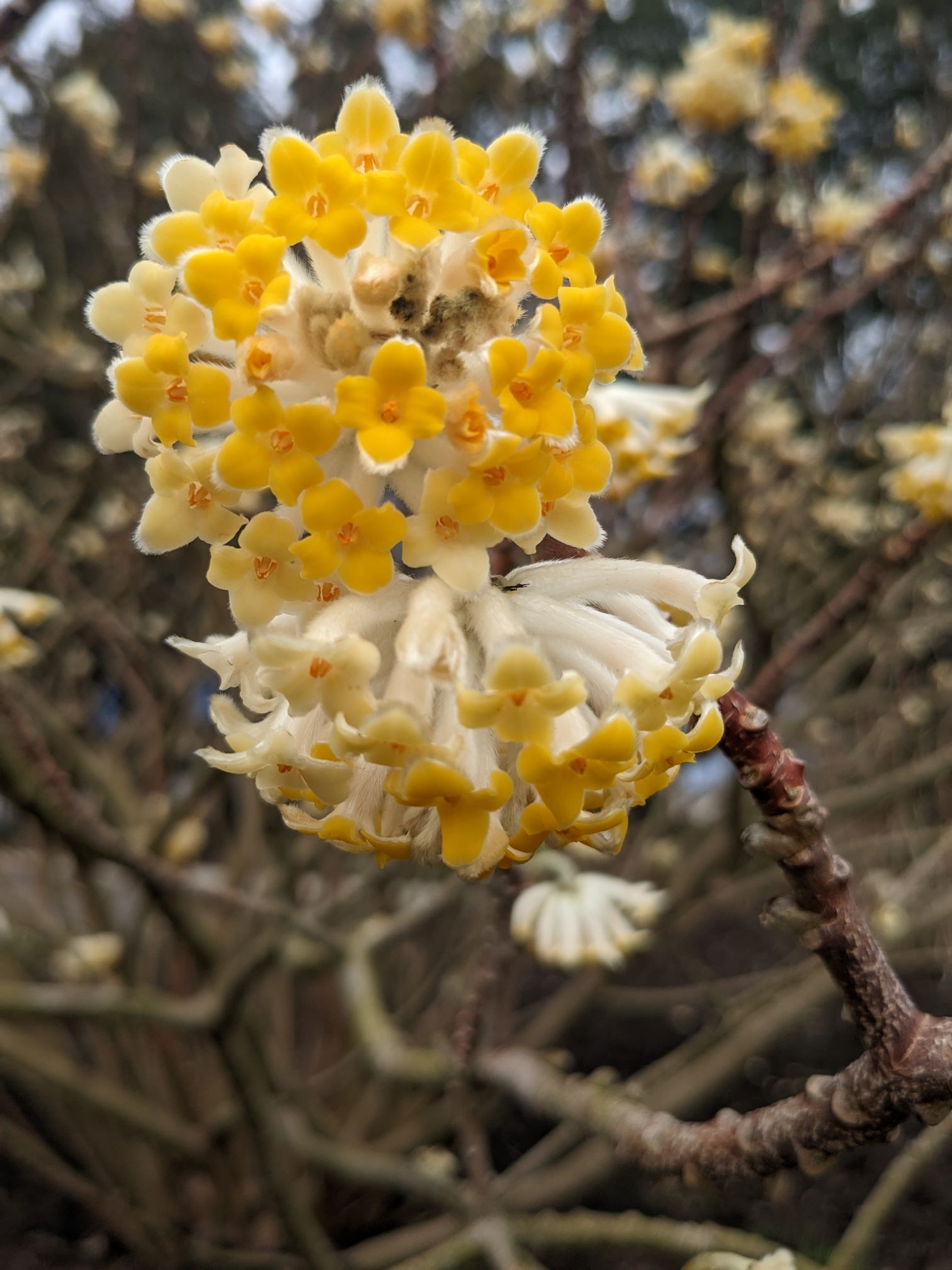 edgeworthia crhysantha goldfinch
Our national collection of witch hazels, with over 220 taxa, can be found throughout the gardens. Many are in bloom now. The spidery flowers in shades of gold, orange, and burgundy may surprise you with a spicy, fresh scent. I love the cultivars ‘Rochester’ and ‘Aurora’ for their powerful perfume. Easy care plants perform and bloom best in full sun. They need soil with decent drainage, too. Relatively carefree, they will provide years of winter loveliness and nice structure. If you site them in front of an evergreen, their blooms will stand out. Or grouped together in twos or threes, they are lovely when backlit by the rising or setting sun. Their warm tones make their flowers glow like tiny flames.
Shrubs in the genus Osmanthus offer a solid choice for structure and fragrance. Tough and drought tolerant, they will thrive in shade and respond well to pruning. They are often referred to as ‘false holly’ as their sharply pointed leaves resemble the prickly leaves of holly. Variegated cultivars, including ‘Goshiki’ illuminate the shade. Their highly refined perfume is intoxicating in its complexity. I have one near my front door and enjoy the fragrance, so unexpected in winter.
One of the loveliest late winter combinations is Corylopsis, or winter hazel, with its soft yellow bracts, paired with Rhododendron mucronulatum’s pale lavender blooms. This combination of opposite colors creates a visual vibration that sings, “Spring!” I prefer the smaller stature of Corylopsis pauciflora. But if you have the room, a glorious grouping could be made with Corylopsis spicata, with much larger blooms.
And if space is at a premium, consider sweetbox, Sarcococca humilis, a small running, but well-behaved evergreen shrub. Elegant deep green glossy leaves run along upright stems a little over 12 inches in height. It thrives in dry shade. A wonderful groundcover, it is unassuming but lovely, and its complex and spicy scent will inspire you to think of spring’s impending arrival.
I look forward to seeing you in the gardens!
