
The Edible Garden
by Linda Nordstrom
 Walk around the circle at Green Spring Gardens and directly across from the gazebo you will find the Edible Garden. Flanked on each side by red and gold amaranth plumes, with an arched entrance covered in hops and purple hyacinth beans, the Edible Garden is a marvel. Located at its current site in 1989, the garden was designed as a demonstration garden. It has morphed in the last 3 years into a “production” garden, as well as maintaining its educational value. When originally sited at this location, the area had to be extensively re-graded due to pugging. Pugging is the compaction and rutting of the soil by the hooves of cows and horses owned by the last private residents (Michael and Belinda Straight) in the 1940s/50s.
Nancy Olney, the gardener in charge of this demonstration garden, retired in 2019. Pam Smith, the GSG Community Horticultural Supervisor, then assumed management. In her role as the Green Spring Extension Master Gardener (GSEMG) Coordinator, she enlisted the help of GSEMGs in managing the garden.
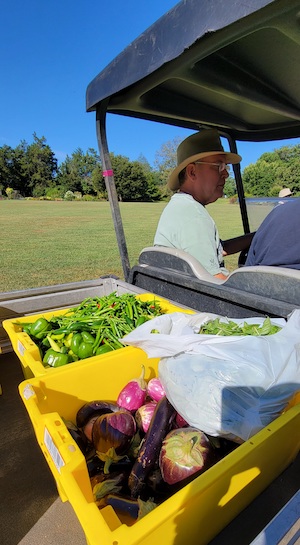
Tim Bowers is the volunteer leader of this garden. He and the garden’s committed volunteers grow nearly two thousand pounds of vegetables each year that are donated to 350 food insecure families at the Annandale Mission Center.
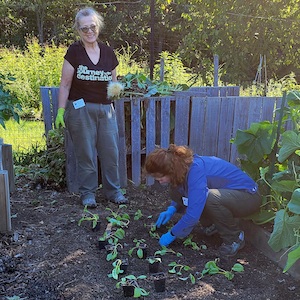 Maintaining the garden is a yearlong effort. Planning starts in January. The Propagation team begins in February with seed sowing and tending the seedlings until the ground is warm enough to plant. The edible garden team uses “organic farming principles.” The soil in the garden has been built up over time using predominantly compost. Little, if any, fertilizer is used on the plants. If needed, occasionally fish emulsion and/or Gardentone is used. The volunteers monitor the plants for pests and disease, determining whether the plant can withstand the damage. They remove pests manually when possible and only use Neem Oil as their “nuclear option” when pests or disease threaten to destroy the plant.
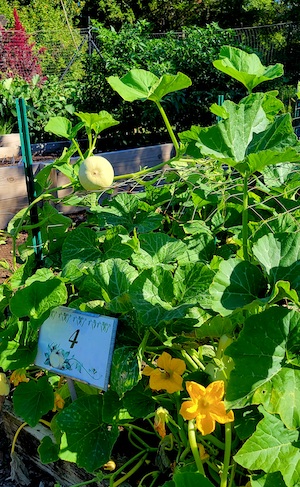
When spring arrives and throughout the summer and early fall, 12-15 volunteers come to the garden two mornings a week to plant, weed, water, and finally harvest the produce. The garden produces lettuce, kale, bok choy, pak choy, tomato, pepper, eggplant, squash, as well as root crops such as turnips, rutabaga, and carrots. This year they are growing tomatillos for the first time.
 Outside the fence, along the perimeter of the garden are herbs and pollinator plants. Sandy Chernin explained that they are growing fragrant and culinary herbs. The African Blue basil was humming with bee activity and the butterflies especially liked the native blue mistflower (Conoclinium coelestinum). Along with these are purple and thai basil, thyme, and lemon bergamot. Several varieties of mint are also happily growing in pots sunk into the ground to prevent spreading.
The Edible Garden, as a demonstration garden, provides educational opportunity. Volunteer Master Gardeners provide docent led tours as well as “workshops” for those interested in vegetable gardening throughout the growing season. The docent led tours are advertised on our website and in all FCPA publications. The monthly Saturday morning workshops are advertised on our Facebook page. Check out these opportunities next spring.
Tim and the crew of volunteers have a twofold mission this year: “Get the best harvest we can get and grow the crops that are needed.” They have done an impressive job!
All photos by Linda Nordstrom.
